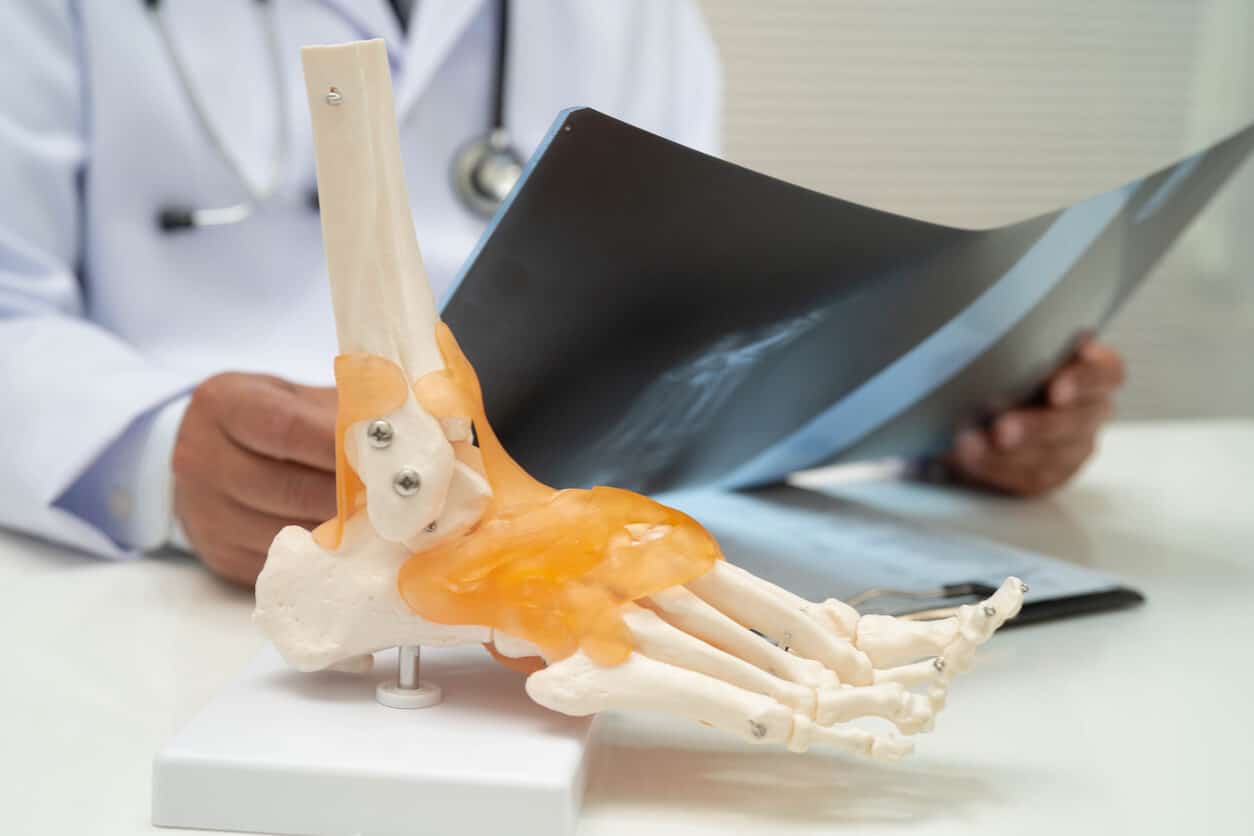

Recovering from a fractured foot depends on the severity of the injury, the treatment plan, and adherence to medical advice.
Here’s a quick summary:
- Week 1-2: Initial focus is on reducing swelling and pain with rest, ice, compression, and elevation (RICE), often paired with the use of crutches or a support boot.
- Week 3-6: Healing progresses as mobility gradually improves. Weight-bearing activities may be introduced under medical guidance.
- Week 7+: Physical therapy helps restore strength and flexibility. Full recovery can take several months for more severe fractures.
Healing takes time, and your recovery timeline is unique to your specific injury. Still, understanding the general phases of fractured foot treatment can help you set realistic expectations and feel more in control of the process.
This guide walks you through recovery week by week, from your first appointment through rehabilitation and a safe return to activity.
Understanding Your Fractured Foot Treatment Journey
Effective fractured foot treatment starts with an accurate diagnosis and a personalized plan tailored to your injury, health, and goals. Understanding what to expect at each stage can make the road ahead feel far less overwhelming.
Foot fractures are among the most common orthopedic injuries we treat. According to the American Academy of Family Physicians (AAFP), they account for about one-third of all lower extremity fractures in adults.
Preparing for Your Initial Consultation
A little preparation helps your first appointment go smoothly. Before you arrive, gather your medical history, including any past injuries, current medications, allergies, and chronic conditions such as diabetes or osteoporosis.
Jot down a list of questions about your injury, treatment options, pain management, and expected recovery so nothing slips your mind during the visit.
Because you may be unable to drive or move around easily, arrange transportation to and from the clinic and line up some help at home for the first few days. This small step can make a meaningful difference in how safely and comfortably your recovery begins.
What to Expect During Diagnosis and Treatment Planning
Your consultation focuses on pinpointing exactly what is wrong so your provider can recommend the right approach. Your appointment will typically include:
- Physical examination and imaging: Your provider will examine your foot for swelling, bruising, tenderness, and deformity, using on-site X-rays — and in complex cases, a CT scan or MRI — to confirm the diagnosis.
- Fracture specifics: Once imaging is complete, your provider will explain whether you have a stress fracture, avulsion fracture, or displaced fracture, and what that means for your recovery.
- Treatment recommendations: Based on the type and severity of your fracture, your provider will recommend the most appropriate non-surgical or surgical path forward.
Non-Surgical vs. Surgical Fractured Foot Treatment
Most foot fractures heal well without surgery, but understanding both approaches helps you feel confident in your care plan.
Non-Surgical Treatment
Most stable, non-displaced fractures respond well to conservative treatment. The goal is to hold the bone in proper alignment while it heals. Your provider may recommend the following:
- Immobilization: A cast, rigid splint, or removable walking boot will protect your foot and prevent further stress to the injury.
- Pain management: Your provider may recommend over-the-counter anti-inflammatory medications or, if necessary, prescribe stronger pain relievers for short-term relief.
- Weight-bearing instructions: Your provider will give you clear guidance on how much pressure you can place on your foot during recovery.
- Mobility aids: Crutches, a walker, or a knee scooter can help you move around safely while keeping pressure off the injured area.
Surgical Treatment
When a fracture is displaced, unstable, or involves a joint, surgery may be the best option to restore proper alignment and function.
Surgeons use hardware such as pins, screws, or small plates to hold the bone fragments in place while they heal. This procedure, known as open reduction and internal fixation, provides the stability that certain fractures need to heal correctly.
If your treatment involves surgery, your recovery timeline may extend somewhat, and your rehabilitation plan will be tailored to protect the surgical repair.
Your surgeon will walk you through every step, from the procedure itself to the specific milestones you can expect afterward.
The Initial Recovery Phase: Immediately After Treatment
The first one to two weeks focus on controlling pain and swelling while giving your body the stable environment it needs to begin healing.
Managing Pain and Swelling
Reducing inflammation early sets the stage for smoother healing. The RICE method remains a cornerstone of care during this phase:
- Rest: Avoid putting weight or stress on the injured foot.
- Ice: Apply an ice pack for 15 to 20 minutes every two to three hours to ease pain and swelling.
- Compression: Use any bandage or wrap exactly as your provider directs.
- Elevation: Keep your foot propped above the level of your heart as often as possible to help fluid drain away from the injury.
Take any prescribed medication exactly as directed. If your pain is not well controlled or you notice unwanted side effects, contact your care team promptly rather than adjusting the dose on your own.
Navigating Life Without Weight-Bearing
Staying off your foot is often the most challenging part of early recovery, but a few strategies make it far more manageable. Take time to practice with your crutches or knee scooter on flat, open ground before navigating tighter spaces.
If you are using crutches, make sure they fit correctly, with a gap of one to two inches between the top of the crutch and your armpit, to avoid nerve irritation.
Preparing your home helps too. Clear walking paths, remove loose rugs, and secure any cords that could cause a fall. A shower chair adds safety in the bathroom, and a backpack lets you keep your hands free while carrying essentials.
Finally, do not hesitate to ask for help. Leaning on family and friends for cooking, cleaning, shopping, or pet care is not a sign of weakness. It is a smart part of protecting your recovery.
Your Week-by-Week Fractured Foot Recovery Timeline
Healing unfolds over weeks and months. While every injury is different, this timeline offers a general framework for what to expect.
Weeks 1–2: Acute Healing and Immobilization
This is the most restrictive phase, and for good reason. During these early days, your body forms a soft callus around the fracture site, laying the foundation for new bone. Your job is simply to protect that fragile process.
During this phase, it’s important to:
- Rest strictly and keep your foot elevated as much as possible
- Follow all non-weight-bearing instructions provided by your care team
You will also attend your first follow-up appointment, typically 7–14 days after treatment. Your provider will check the fit of your cast or boot and may order an X-ray to confirm proper bone alignment.
Watch closely for warning signs of complications, including:
- Fever
- Spreading redness or warmth around the injury site
- Increasing numbness or tingling
- A cast that suddenly feels too tight
Weeks 3–8: Bone Healing and Transition
As the soft callus hardens into stronger bone, your foot gradually becomes more stable. According to the Cleveland Clinic, most simple foot fractures heal within six to eight weeks, though more severe injuries and surgical cases can take longer.
This phase often brings welcome signs of progress.
- Transition to a walking boot: Many patients move from a rigid cast to a removable walking boot, which offers protection while allowing gentle motion and easier hygiene.
- Gentle range-of-motion exercises: Under your provider’s guidance, you may begin non-weight-bearing movements such as pointing, flexing, and gentle ankle circles to prevent stiffness and maintain flexibility.
- Gradual weight-bearing: Your team will schedule a slow, careful return to bearing weight, often beginning with light “toe-touch” contact and progressing as your bone strengthens.
Resist the urge to rush this phase, even as you start to feel better. Steady, guided progress protects the healing you have worked so hard to achieve.
Weeks 9–12: Strengthening and Functional Recovery
With the bone substantially healed, attention shifts to rebuilding strength and restoring normal function. This is where physical therapy becomes central to your fractured foot treatment.
A physical therapist will design a program tailored to your needs, focusing on restoring strength, flexibility, balance, and a natural walking pattern.
You will progressively increase weight-bearing and, under your therapist’s direction, gradually wean off your boot and any remaining mobility aids.
Most patients can resume light daily activities during this window, though high-impact movements like running and jumping typically remain off-limits a while longer.
Beyond 12 Weeks: Full Recovery and Prevention
The final phase centers on returning to your normal lifestyle while protecting your foot against future injury.
With your provider’s clearance, you can begin phasing back into more demanding work, hobbies, and sports. Listen to your body throughout, and back off any activity that triggers pain.
Continue the strengthening exercises you learned in therapy to support long-term stability. This is also the time to think about prevention.
Talk with your care team about supportive footwear, custom orthotic inserts, and any adjustments to your technique in sports or work that could reduce your risk of re-injury.
Optimizing Your Healing: Tips for the Best Outcome
Your daily choices have a real impact on how well and how quickly your foot heals.
Adhering to Medical Instructions
- Wear your immobilization device exactly as directed, keeping any cast or boot clean and dry
- Report any cracks, soft spots, or fit problems to your care team promptly
- Follow your weight-bearing restrictions precisely, as putting weight on the foot too soon can delay healing or cause re-injury
- Attend every follow-up appointment to allow your provider to monitor your progress, adjust your treatment plan, and address any concerns before they become problems
Nutrition and Lifestyle Support
Supporting your body’s healing process starts with the right lifestyle choices:
- Eat a balanced diet rich in calcium, Vitamin D, and protein to provide the essential building blocks for bone repair
- Avoid smoking and excessive alcohol, both of which interfere with bone formation and can significantly slow your recovery
- Prioritize quality sleep, aiming for seven to nine hours each night, as much of your body’s repair work occurs during rest
Mental and Emotional Well-Being
Recovery is a marathon, not a sprint, so practice patience and focus on the small wins each day brings. Stay connected with family and friends who can offer both practical help and emotional encouragement.
If frustration or anxiety begins to feel overwhelming, speak with your provider, who can point you toward additional support.
Frequently Asked Questions (FAQ)
Below, we’ve compiled answers to some of the most common questions about fractured foot treatment to help you better understand your injury and recovery process.
What are the common symptoms of a foot fracture?
Common symptoms include pain, swelling, bruising, difficulty walking or bearing weight on the foot, and sometimes visible deformities. If you experience any of these, it’s important to seek medical evaluation promptly.
How is a foot fracture diagnosed?
A foot fracture is typically diagnosed through a physical examination and imaging tests like X-rays. In some cases, advanced imaging such as an MRI or CT scan may be recommended to assess the severity and type of fracture.
What are the options for fractured foot treatment?
Treatment options can range from rest and immobilization with a cast or splint to surgical intervention, depending on the severity and location of the fracture. Your doctor will work with you to create a treatment plan tailored to your needs.
How long does it take to recover from a foot fracture?
Recovery time varies depending on the type and severity of the fracture as well as individual factors like age, overall health, and adherence to the treatment plan.
Most fractures heal within 6 to 12 weeks, but full recovery, including regaining mobility and strength, may take longer.
Can I prevent foot fractures in the future?
While not all fractures can be prevented, wearing proper footwear, maintaining good bone health through nutrition and exercise, and practicing safety during physical activities can reduce your risk of injury.
Get Expert Fractured Foot Treatment in Morrisville, Cary, and Holly Springs, NC
A broken foot deserves prompt, specialized care that guides you from your first X-ray all the way through a confident return to the activities you love.
At Cary Orthopaedics, our team is dedicated to restoring your good health and mobility with personalized fractured foot treatment tailored to your specific injury and goals.
If you are recovering from a foot fracture or suspect you may have one, Cary Orthopaedics is here to help. Call us at (919) 573-4825 to schedule your visit today.